

Key Takeaways
A steady eating pattern matters more for gut health than any single “superfood.” The foods below offer probiotics, prebiotic fibers, plant variety, and healthy fats that can support digestion as part of an overall balanced diet.
- Choose yogurt and kefir with live cultures when dairy agrees with you.
- Build meals around beans, whole grains, vegetables, fruit, nuts, and seeds.
- Add fermented vegetables in small portions and watch how your body responds.
- Include fatty fish for omega-3 fats alongside a fiber-rich diet.
- Increase fiber gradually, drink enough fluids, and seek medical advice for persistent symptoms.
1. Yogurt with live and active cultures
Yogurt with live and active cultures is an easy place to start when you want to add a fermented food to your routine. The cultures used to make yogurt can contribute beneficial microorganisms, though the exact effect varies by product and person. Plain yogurt also provides protein, making it useful at breakfast or as an afternoon snack.
Look for “live and active cultures” on the label, and choose a style with less added sugar when possible. You can add berries, oats, or chopped nuts for more fiber and texture. If regular dairy causes discomfort, lactose-free yogurt may be easier to tolerate, while people with a milk allergy should avoid it altogether.
Food works best as part of a pattern rather than a quick fix. A varied diet gives the gut microbiome different fibers to work with, and research on the subject continues to develop; what gut health means is broader than simply eating probiotic foods. Start with a modest serving and notice how your digestion responds.
2. Kefir and other cultured dairy foods
Kefir is a drinkable cultured dairy food with a tangy flavor and thinner texture than yogurt. It can be poured over cereal, blended with fruit, or enjoyed on its own. Other cultured dairy foods, including some cottage cheeses and cultured buttermilk products, can also fit into a varied eating pattern when they contain live cultures.
Because kefir is often more tart than people expect, it helps to use it in familiar ways at first. A small glass with a meal may feel more manageable than a large serving on an empty stomach. Check labels for added sugar, especially in flavored varieties, and remember that “cultured” does not automatically mean every product contains the same organisms or amount of them.
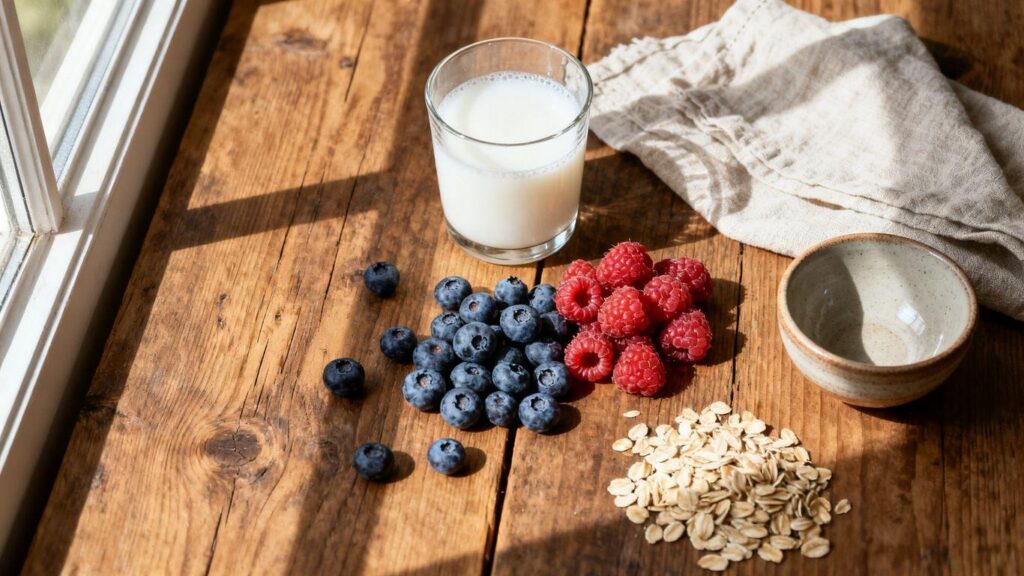
Pairing cultured dairy with fiber-rich foods creates a more satisfying snack than relying on a sweetened drink alone. Try kefir with oats and fruit, or yogurt with ground flaxseed. Those combinations bring together protein, carbohydrates, and plant fibers without making one food responsible for your entire gut health routine.
3. Fermented vegetables
Fermented vegetables such as sauerkraut, kimchi, and fermented carrots add sharp flavor as well as a source of live microorganisms when they are not heat-treated after fermentation. They can brighten a sandwich, grain bowl, or simple dinner. Their value is also practical: a spoonful can make plain food more appealing, which may help you eat a wider range of plants.
Not every pickled vegetable is fermented. Some are preserved in vinegar, while others are pasteurized, so the label and preparation method matter. Fermented vegetables can also be high in sodium, and spicy versions may bother people with sensitive digestion.
Begin with a small portion rather than treating a large serving as a test of willpower. If you tolerate it well, use it as a flavorful side a few times a week. Variety still matters more than chasing one particular jar, and the gut microbiome and diet are influenced by the broader mix of foods you eat over time.
4. Beans, lentils, and chickpeas
Beans, lentils, and chickpeas are among the most useful foods for a fiber-rich diet. Their carbohydrates include fibers that reach the large intestine, where microbes can ferment them. They also bring plant protein, minerals, and staying power to soups, salads, tacos, and grain bowls.
If beans tend to cause gas, increase portions gradually. Rinsing canned beans well, choosing lentils, and spreading servings across the week may make the transition easier. Cooking dried beans thoroughly can help too, but digestive responses remain individual.
A simple approach is to replace part of the meat in a familiar meal with legumes instead of redesigning your entire menu. Add lentils to pasta sauce, chickpeas to a salad, or black beans to rice. The aim is a sustainable increase in variety, not a sudden jump that leaves you uncomfortable.
5. Whole grains
Whole grains contain more of the grain kernel than refined grains, including fiber and other naturally occurring nutrients. Oats, barley, brown rice, quinoa, bulgur, and whole-grain bread can make everyday meals more filling while supplying different types of plant material for digestion. They are especially easy to use as the base of breakfast bowls, lunches, and dinners.
The best choice is often the one you will actually eat. If you are used to white rice, try mixing it with brown rice before switching completely. Oatmeal, popcorn without excessive butter, and whole-grain pasta are other approachable ways to build the habit.
6. Berries and other fiber-rich fruits
Berries provide fiber, water, and naturally sweet flavor in a relatively small serving. Blueberries, raspberries, blackberries, and strawberries work well in yogurt, oatmeal, or salads. Apples, pears, kiwi, oranges, and plums can add similar variety in different seasons and textures.
Whole fruit is generally more useful for fiber than juice because the intact fruit retains its structural components. Frozen berries are a practical option when fresh fruit is expensive or out of season. If you are increasing fruit quickly, spread servings throughout the day rather than eating a large amount all at once.
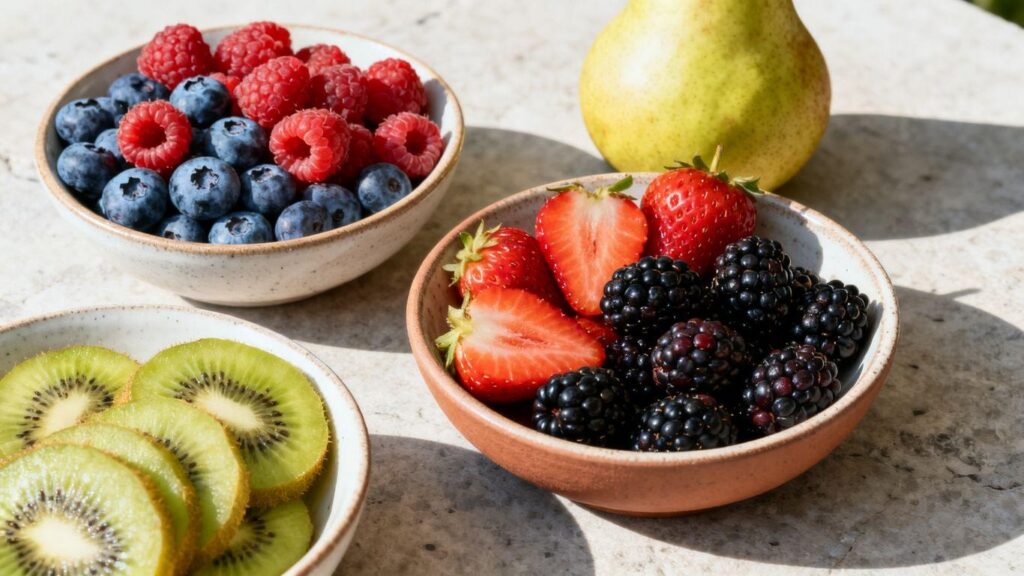
Fruit does not need to be dressed up to count. Keep washed apples near your desk, add berries to breakfast, or pack a pear with lunch. For a broader perspective on symptoms that may deserve attention, signs of poor gut health can help distinguish an occasional digestive complaint from a persistent pattern worth discussing with a clinician.
7. Leafy greens and cruciferous vegetables
Leafy greens and cruciferous vegetables add fiber and an impressive range of plant compounds to meals. Spinach, kale, collards, broccoli, cauliflower, cabbage, and Brussels sprouts can all fit into a gut-friendly pattern. Eating them cooked may be easier for some people than eating large raw salads.
Aim for variety in color and preparation rather than forcing yourself to eat one vegetable every day. Steam broccoli, roast cauliflower, sauté greens, or add shredded cabbage to a taco. Frozen vegetables are perfectly practical and can reduce the pressure to shop constantly.
Some people notice more gas when they first increase cruciferous vegetables. Smaller portions, thorough cooking, and gradual changes can help. If a vegetable consistently causes significant symptoms, pause and discuss the pattern with a healthcare professional instead of assuming discomfort is something you must endure.
8. Onions, garlic, and other prebiotic vegetables
Onions, garlic, leeks, asparagus, and Jerusalem artichokes contain fibers that can serve as food for microbes in the colon. They also provide a strong base of flavor, which makes it easier to cook satisfying meals with less reliance on heavy sauces. Garlic and onions can turn beans, grains, and vegetables into a complete-tasting dish.
These foods are not universally comfortable. Their fermentable carbohydrates can worsen bloating for some people, particularly in large portions. Cooking them well and using a smaller amount may be a reasonable experiment, but anyone following a therapeutic elimination plan should work with a qualified professional.
Think of prebiotic vegetables as ingredients to explore, not a scorecard. Use garlic in a roasted vegetable dish, add leeks to soup, or include asparagus with a meal when it suits you. The larger goal is a varied menu that feels good enough to repeat.
9. Nuts and seeds
Nuts and seeds contribute fiber, unsaturated fats, minerals, and a satisfying crunch. Almonds, pistachios, walnuts, chia seeds, flaxseed, pumpkin seeds, and sunflower seeds can be sprinkled over yogurt, folded into oatmeal, or added to salads. Their combination of fat and fiber may also help a meal keep you satisfied.
Portion size matters because nuts and seeds are energy-dense, but they do not need to be treated as a forbidden food. Choose unsalted versions when sodium is a concern and consider ground flax or chia if whole seeds are difficult to chew or digest. Nut butters can work too, provided the ingredient list suits your needs.
A few simple ways to use them can make the habit more automatic:
- Stir chia seeds into overnight oats.
- Add walnuts to a grain-and-vegetable bowl.
- Sprinkle pumpkin seeds over soup or roasted greens.
- Use natural peanut or almond butter with sliced fruit.
These additions are small, but they can broaden the texture and nutrient mix of ordinary meals. Add them gradually if your current diet is low in fiber, and pair them with enough fluid, especially when using concentrated seeds.
10. Fatty fish rich in omega-3s
Salmon, sardines, trout, herring, and mackerel are fatty fish that provide omega-3 fats along with protein. They are not probiotic foods, yet they fit into a gut-supportive diet because overall dietary quality includes more than the microorganisms in fermented foods. A fish dinner can also replace a meal built around highly processed ingredients.
Try baked salmon with barley and greens, sardines on whole-grain toast, or trout with roasted vegetables. Canned fish can be just as useful for quick meals; compare labels for sodium and choose a form that works for your budget. People who avoid fish can ask a clinician or dietitian about appropriate alternatives.
No single food can define your digestive health. A pattern that regularly combines plants, whole grains, legumes, fermented foods when tolerated, and sources of healthy fats is more realistic than focusing on a miracle ingredient. For a wider explanation of why digestion, immunity, and the microbiome are discussed together, the science of gut health offers useful context while acknowledging that the term itself is still not precisely defined.
Conclusion
The best foods for men’s gut health are familiar ingredients used consistently: cultured dairy if tolerated, legumes, whole grains, fruits, vegetables, nuts, seeds, and fatty fish. Build changes slowly, keep meals varied, and pay attention to your own symptoms rather than copying someone else’s routine. Persistent pain, bleeding, unexplained weight loss, or ongoing changes in bowel habits deserve medical attention.
Frequently Asked Questions
What is gut health?
Gut health is a broad term that can include digestion, bowel function, the gut microbiome, and the absence of significant gastrointestinal symptoms. It does not have one universally accepted definition, so it is best considered in the context of your overall health and medical history.
Which food is best for gut health?
There is no single best food for everyone. A varied pattern that includes fiber-rich plants, whole grains, legumes, and fermented foods when tolerated is generally more useful than relying on one ingredient.
How much fiber should men eat each day?
Fiber needs vary with age, energy needs, and individual health. Increase high-fiber foods gradually, drink enough fluids, and ask a healthcare professional for personalized guidance if you have a digestive condition.
Can yogurt improve digestion?
Yogurt with live and active cultures may fit into a diet that supports digestion, but effects differ from person to person. Choose a product you tolerate and watch added sugar and portion size.
Are fermented foods necessary for a healthy gut?
Fermented foods can add variety and, in some products, live microorganisms, but they are not essential for everyone. Fiber-rich plant foods and an overall balanced diet remain important parts of the picture.
Why do beans cause gas?
Beans contain fermentable carbohydrates that gut microbes break down, producing gas for some people. Smaller portions, gradual increases, thorough cooking, and rinsing canned beans may improve tolerance.
When should digestive symptoms be checked by a doctor?
Seek medical advice for persistent or worsening symptoms, blood in the stool, unexplained weight loss, severe pain, repeated vomiting, or a lasting change in bowel habits. A clinician can help identify causes that food changes alone may not address.